

Item : 319518
Langetti Giovan Battista (Genoa 1635 – Venice 1676), King and prophet SOLD
Author : Langetti Giovan Battista
Period: 17th century
Langetti Giovan Battista
(Genoa 1635 – Venice 1676)
King and prophet
Oil on canvas
137.5 x 113.5 cm
SOLD
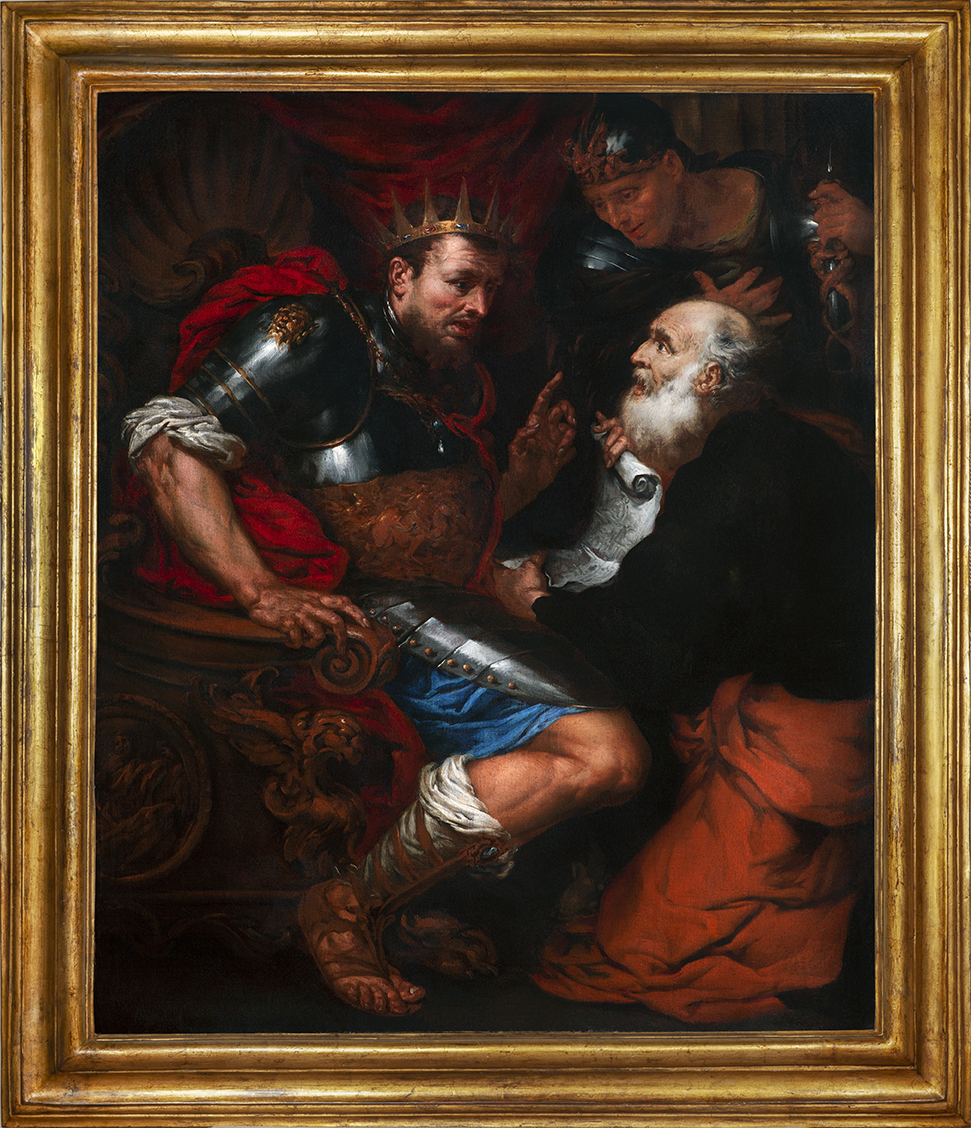
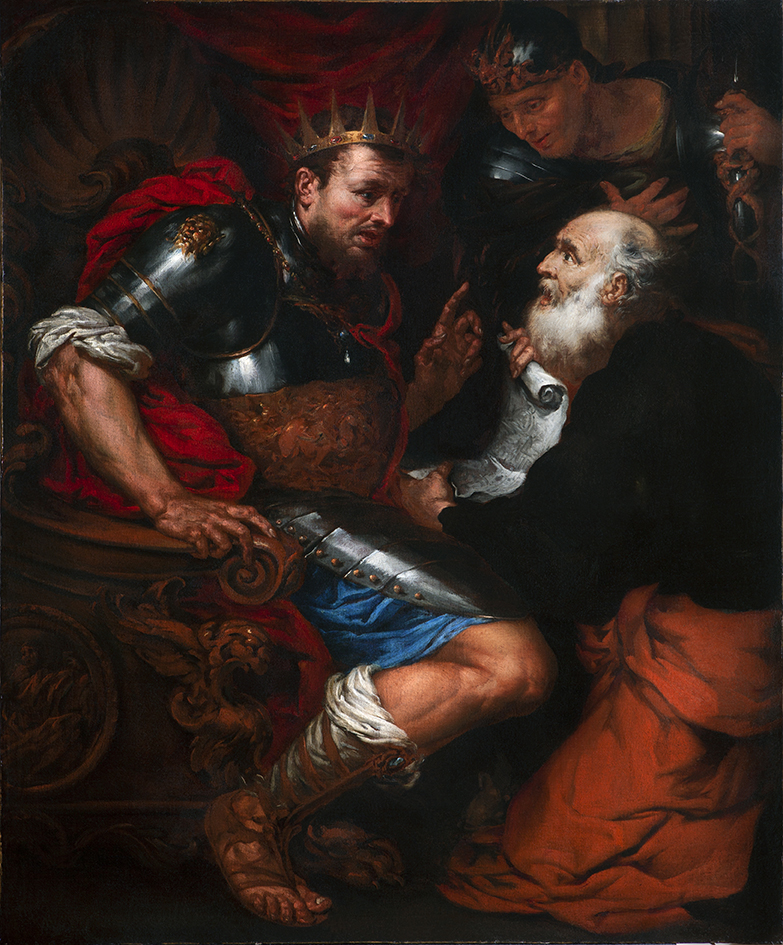
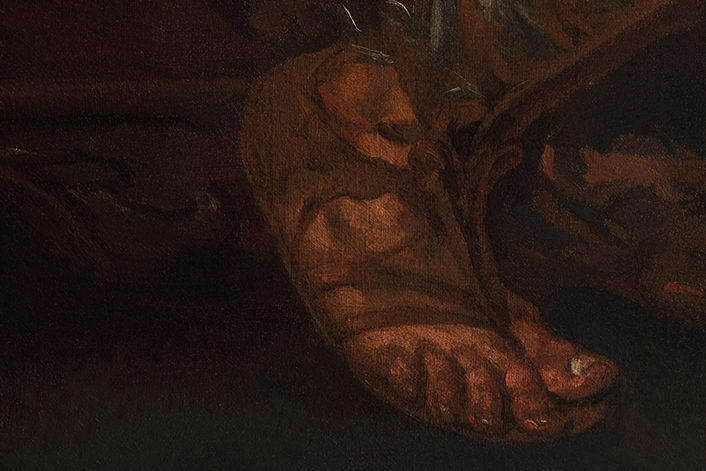
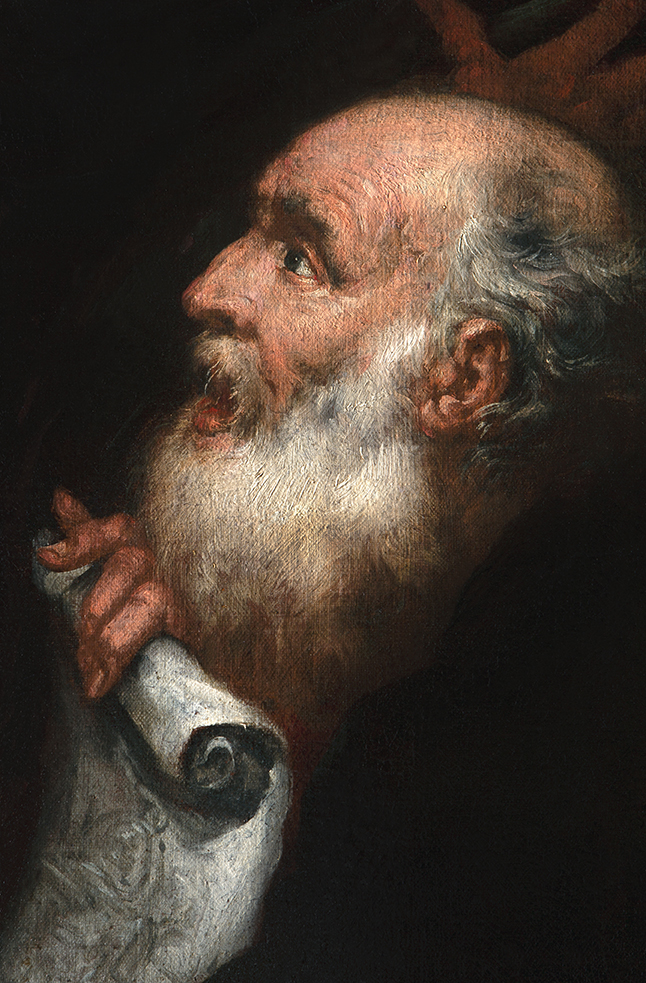
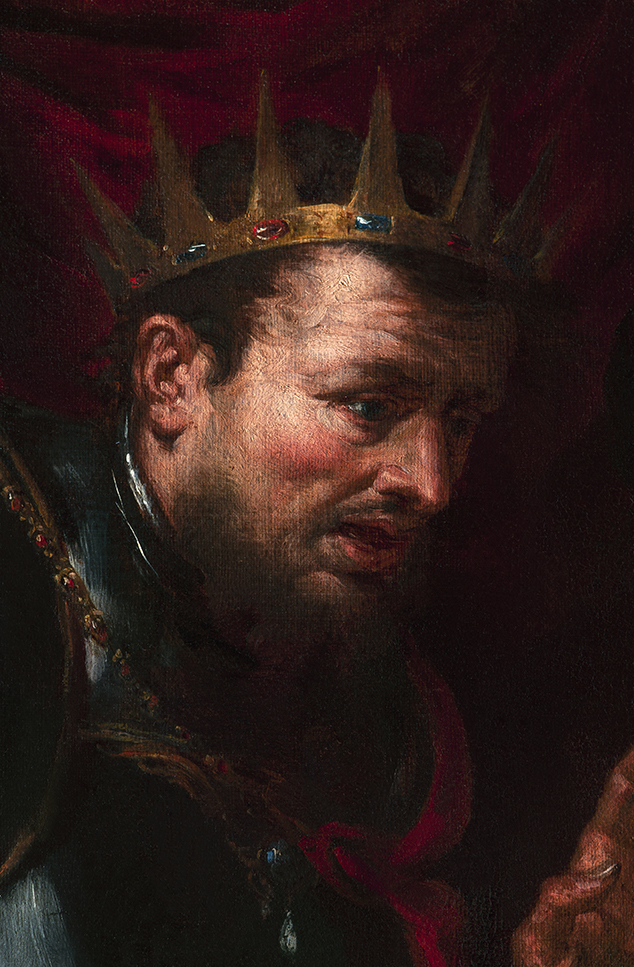
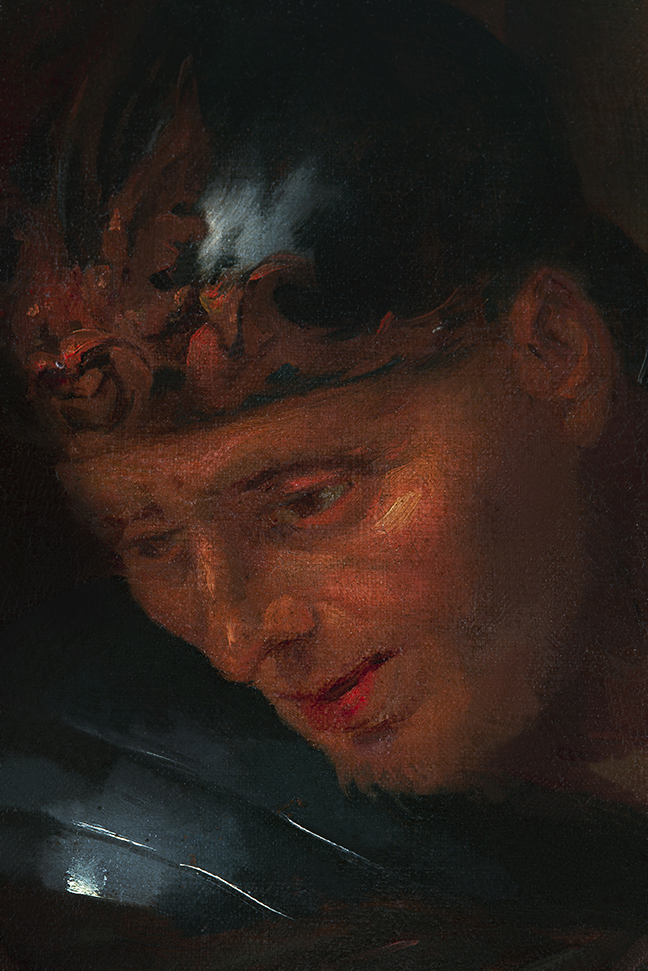
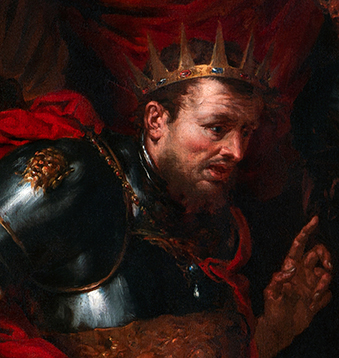
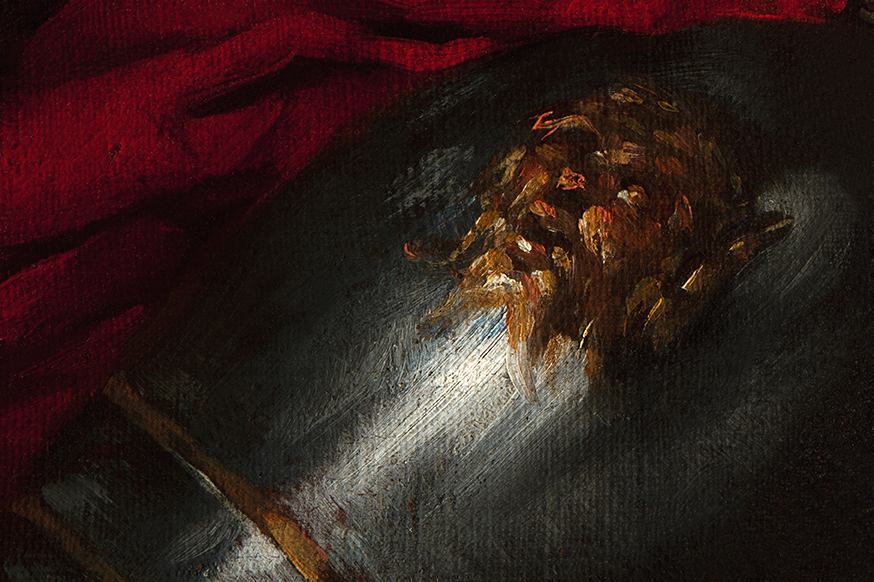
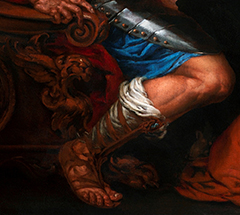
KING AND PROPHET Monte Carlo, Carenieri-Romanione Collection Figure 94 In this work, as in his last paintings, Langetti, having overcome his marked naturalistic tendency, reveals a vibrant capacity for synthesis and an inner composure that distinguishes the scene and the characters represented in profile and confined in a small space: the richly dressed king from his crown to his footwear, sitting on a throne adorned with elegant bas-reliefs and volutes; and the bearded prophet who, kneeling at his feet, unrolls a written text. The spirit of the painting, underlined by the light that strikes the figures from the left, lies entirely in the tension between the old prophet who admonishes the king by putting the scroll in front of him and the king who, aware of his authority if not his right, reacts to the 'imposition' that comes to him from above trying to evade it or at least question it. A figure in the background listens and participates with his hand on his chest. The scene could refer to a biblical episode such as that of Jeremiah confronting the King of Israel with his prophetic threats. However, it is difficult to identify a specific episode with certainty, as the sources provide no indication. The evidence with which the scroll is represented suggests to me the episode of Jeremiah announcing the word of the Lord (which he had transcribed on the scroll) to Zedekiah, King of Judah, when Nebuchadnezzar, King of Babylon, threatens Jerusalem (Jer., 34-39). The oracle is that of an angry God, and the tension of the biblical pages in which the tragic destiny that looms over the king, his nation, and his descendants is foreshadowed shines through in the depiction of the two characters: mourning, war, plague, darkness (blinding of the king). These are themes dear to Langetti. This is from a content point of view. From a stylistic point of view, the composition is distinguished not only by the elegance of the ensemble and the details, but also by a formal maturation, in the casual, predominantly curved lines evident in the furnishings, in the ruffled robes, in the scroll, in the foaming beard, which give the ensemble a character of lively Baroque airiness. Bibl.: Ewald, 1965, p. 131; Stefani, 1965-66, p. 188-189; 1967, p. 215; Stefani Mantovanelli, 1990, P. 80.