


Item : 327005
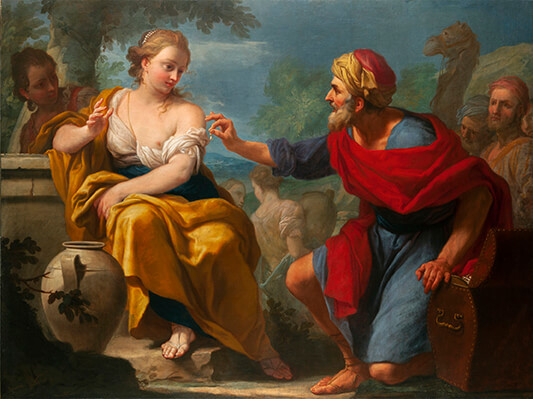
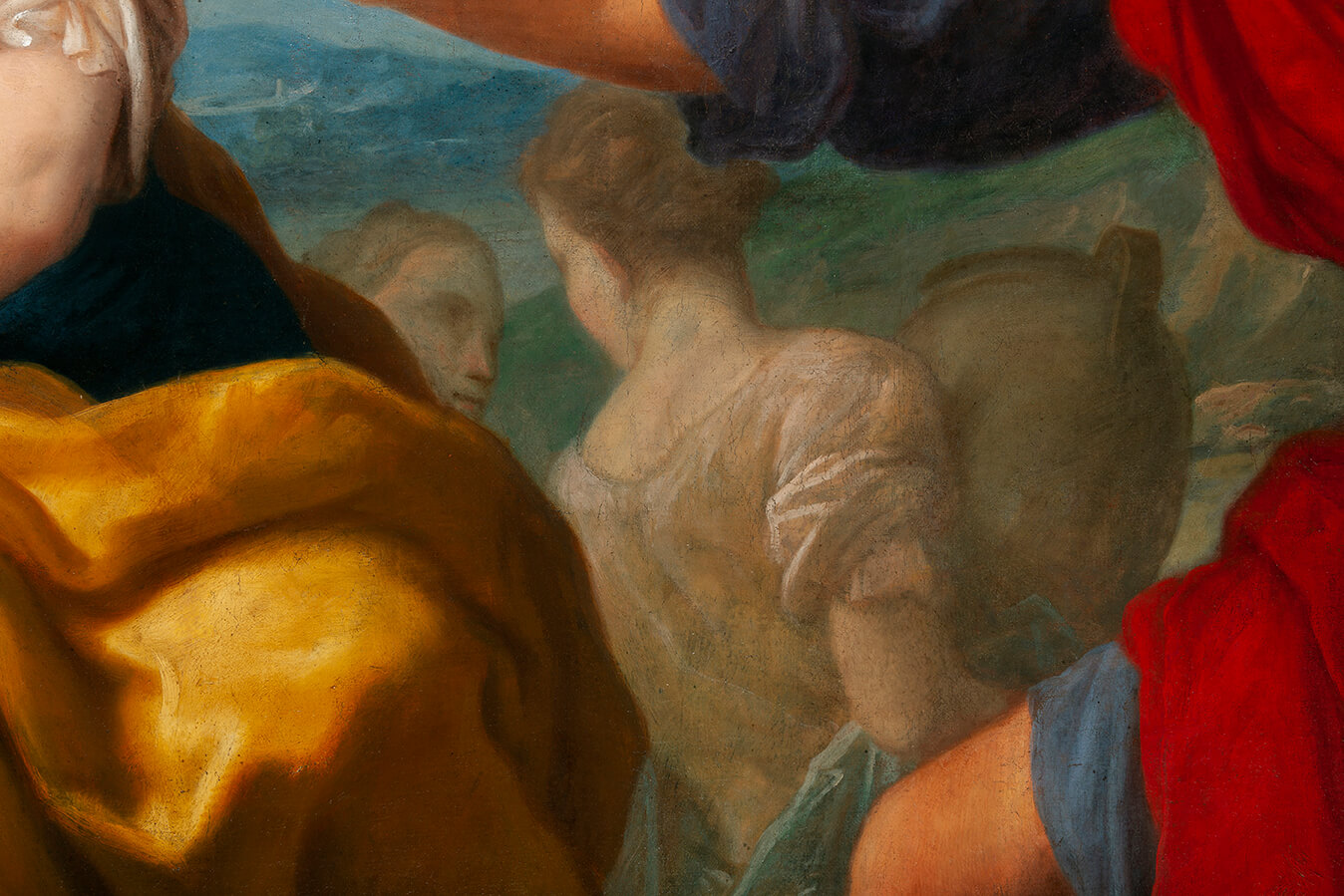
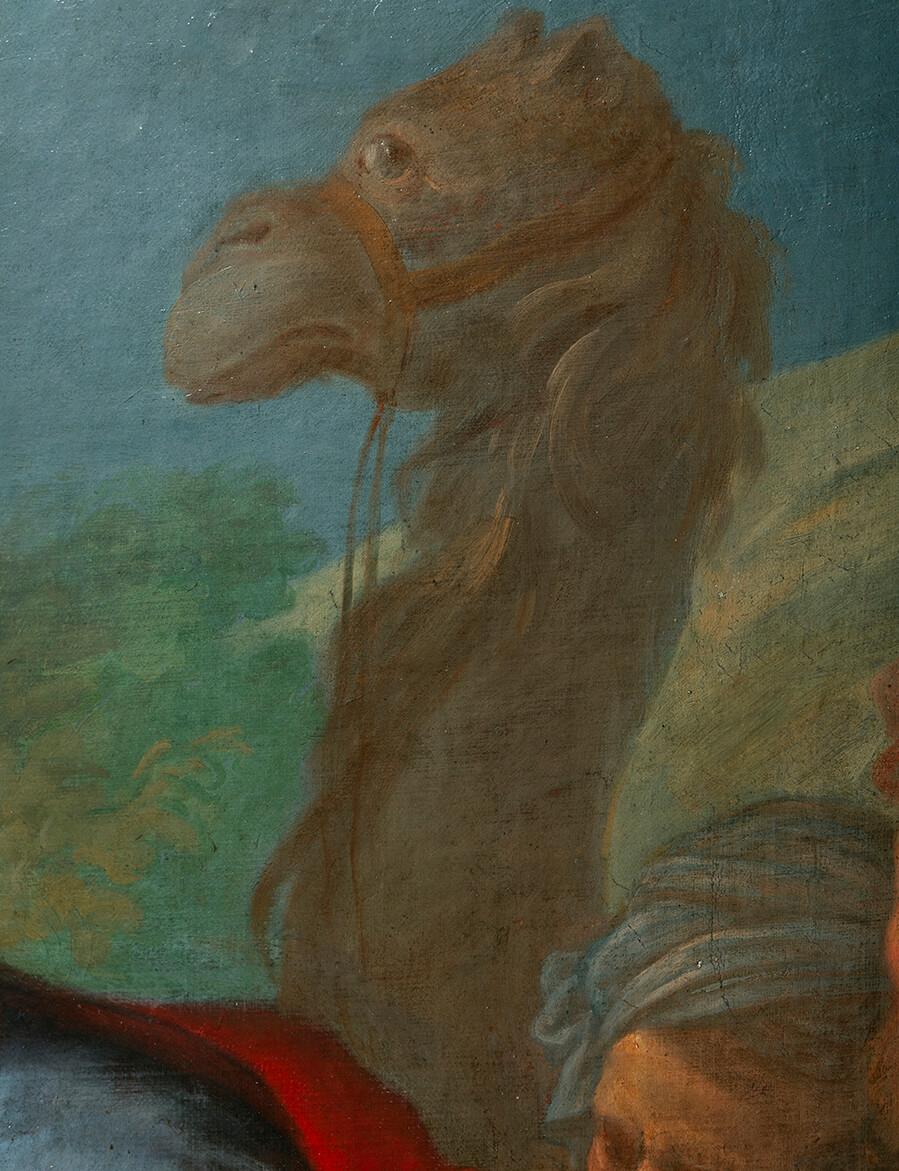
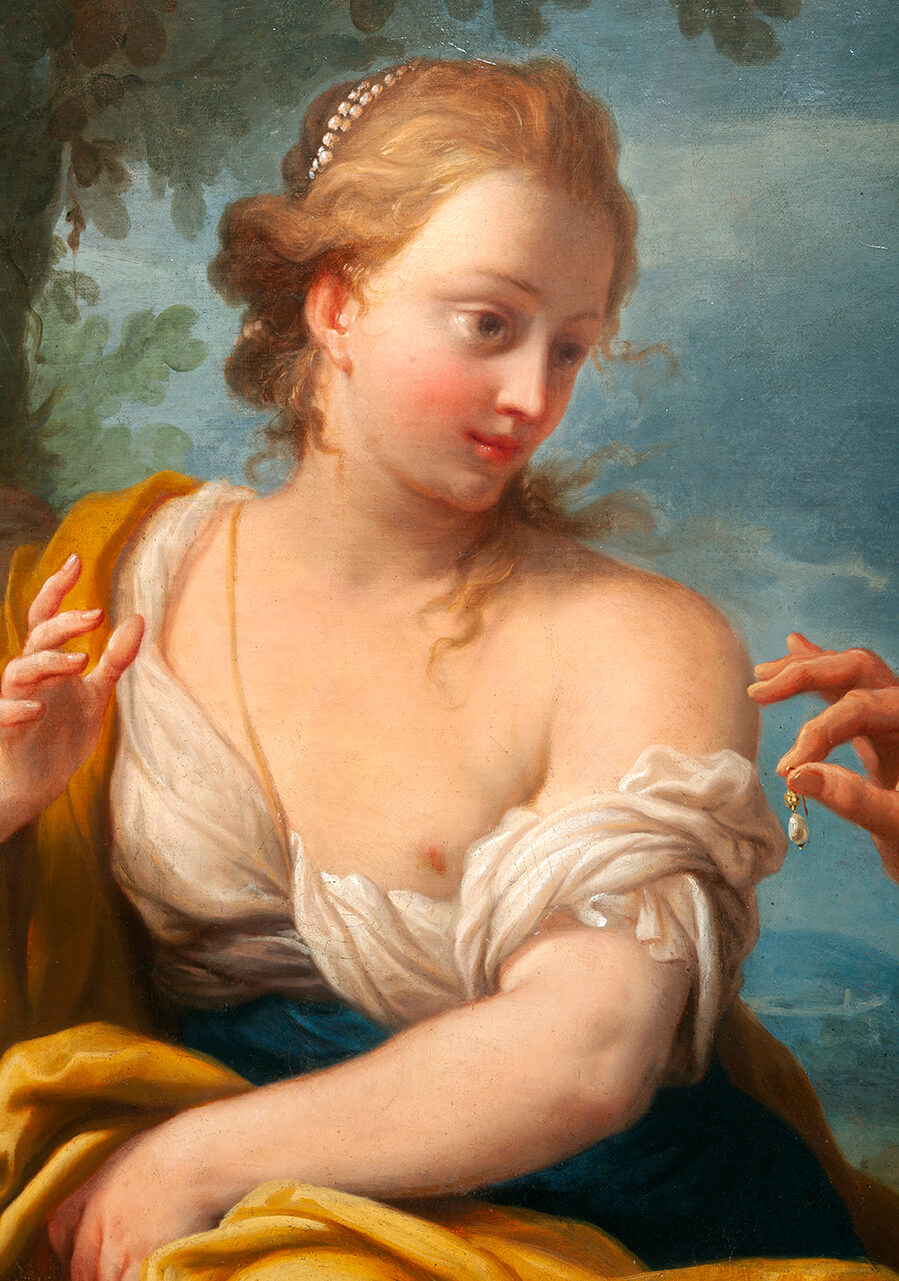
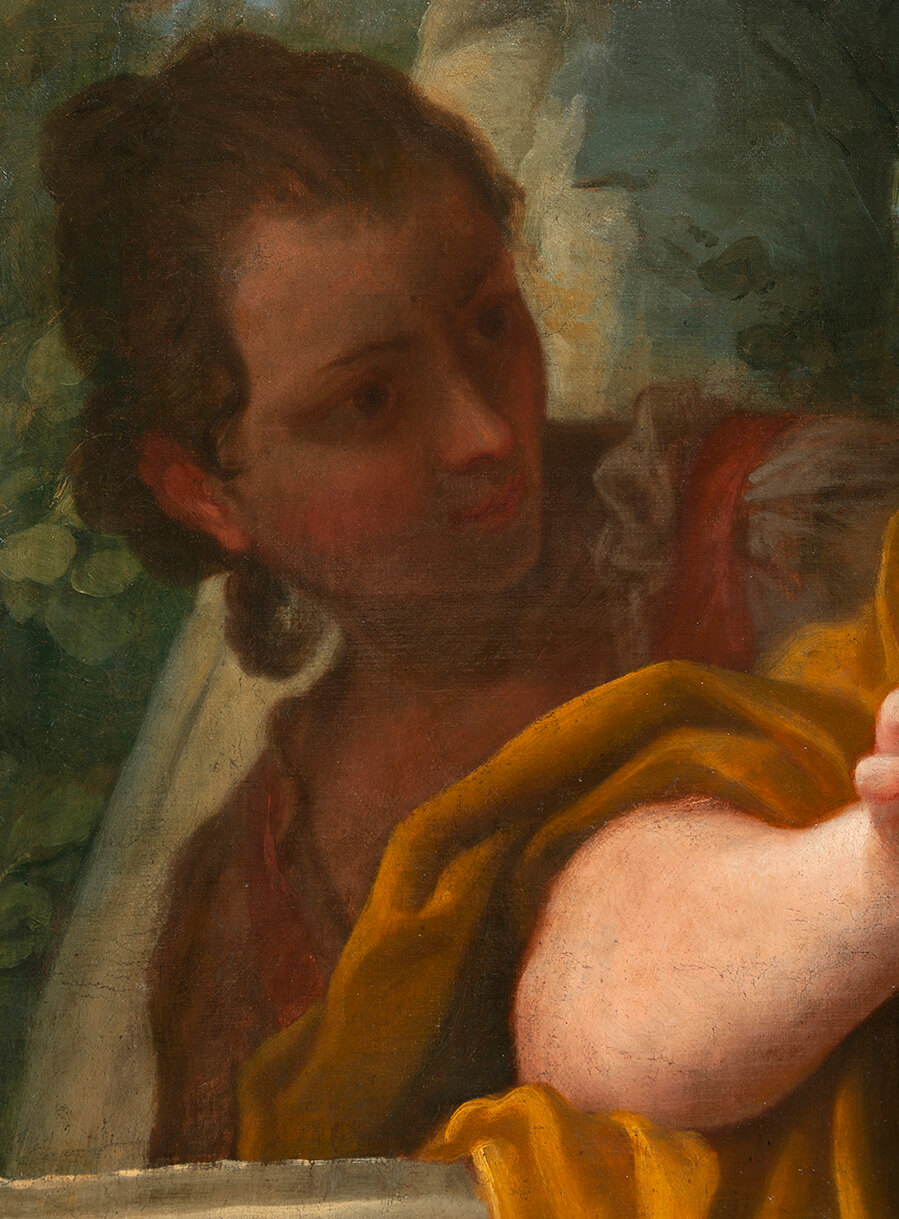
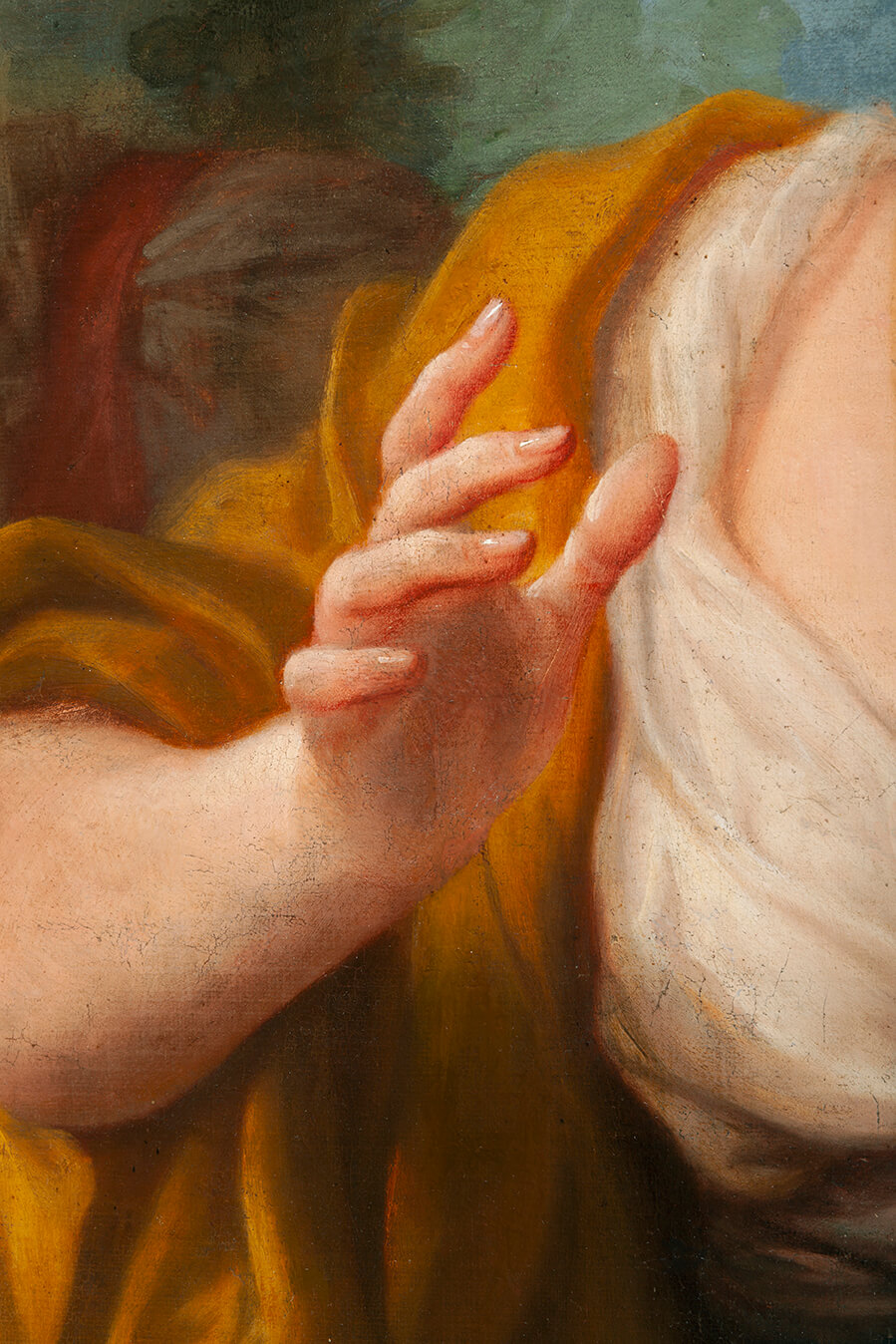
Antonio Molinari (Venice, 1655 – 1704), Rebecca and Eliezer at the Well SOLD
Author : Antonio Molinari (Venezia, 1655 – 1704)
Period: 17th century
Antonio Molinari
(Venice, 1655 – 1704)
Rebecca and Eliezer at the Well
17th century
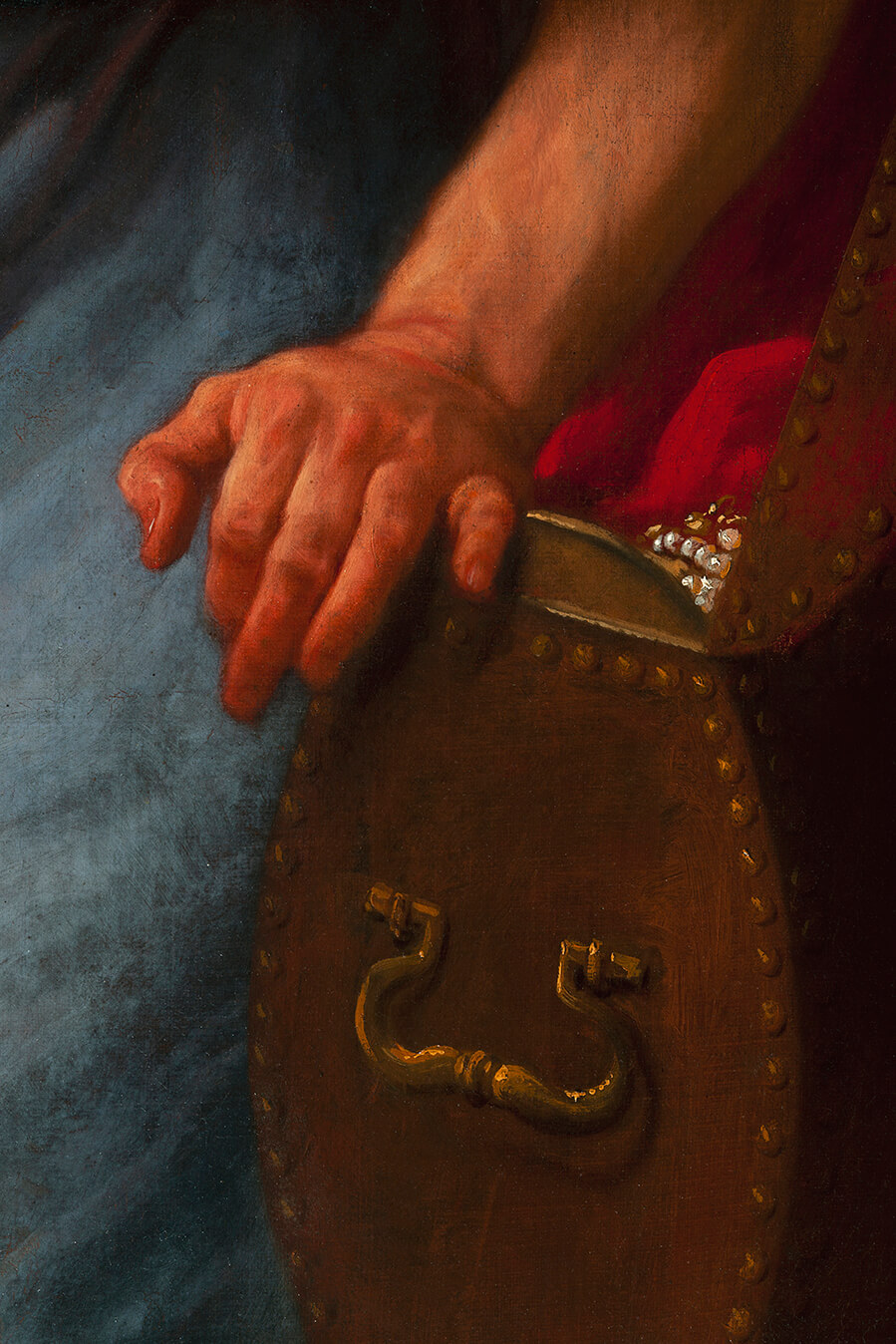
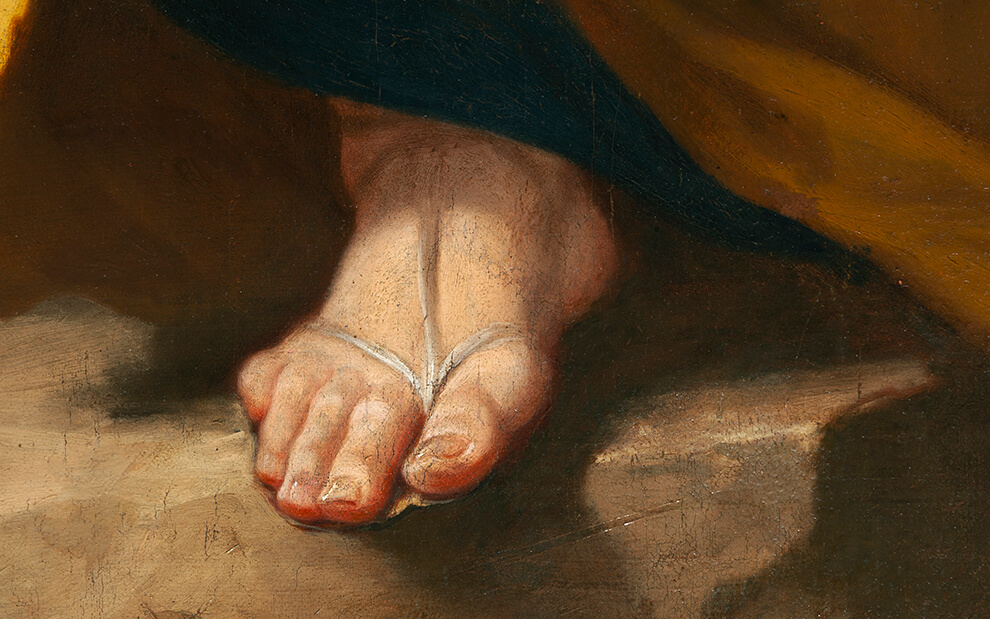
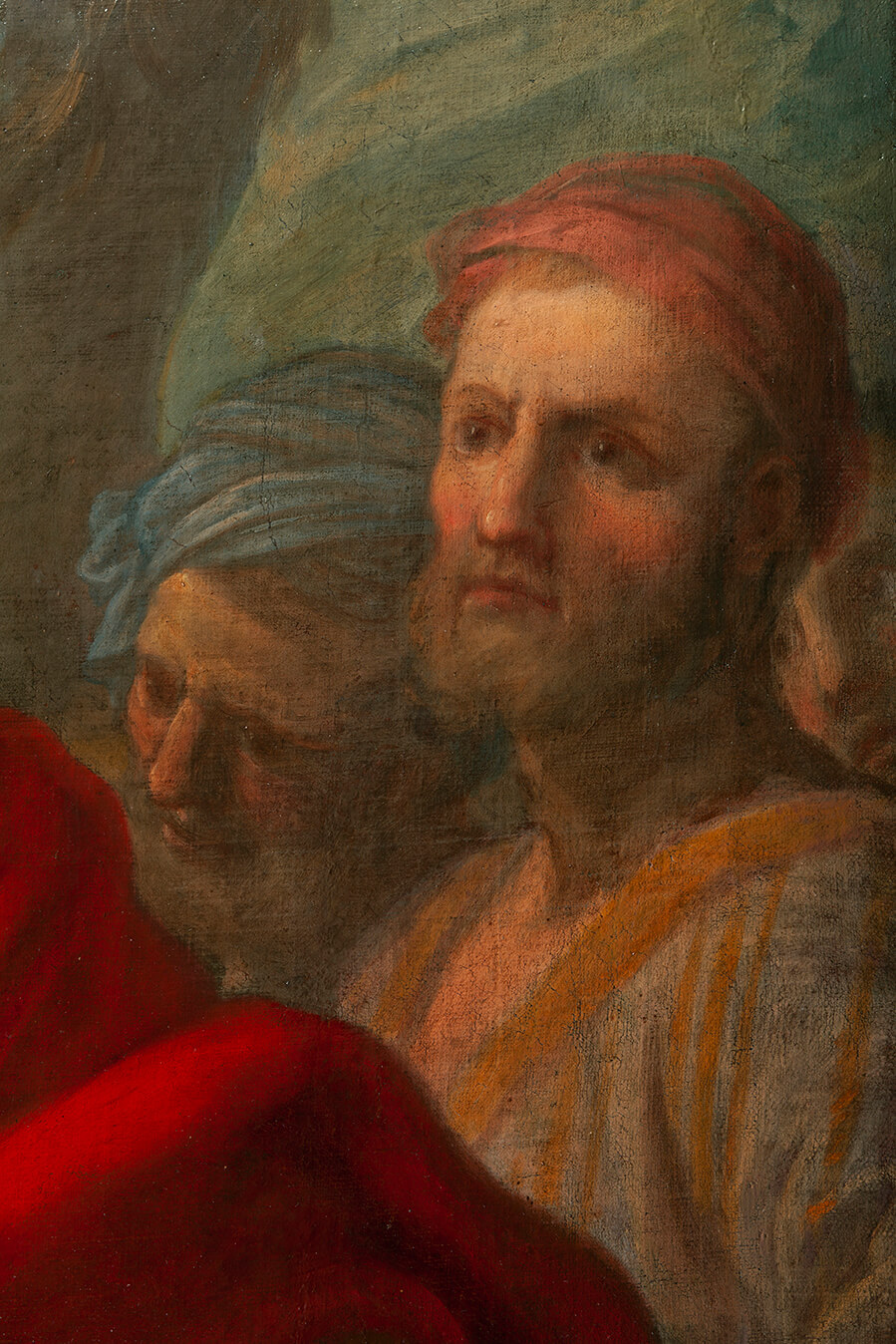
Oil on canvas, 147 x 196 cm
Expertise/attribution confirmation: painting based on a preparatory drawing, now kept in the Louvre museum collection
MOLINARI, Antonio. – Born in Venice on January 21, 1655, to Giovanni and a Paolina about whom no further details are known (Moretti, 1979, p. 67). Molinari's training took place under the guidance of his father, a painter, and Antonio Zanchi. The first document attesting to Molinari's pictorial activity is the account book of the Correggio family, which states that in 1671 he made copies of nine paintings by Zanchi (ibid., pp. 191 ff.). Given the high number of copies from a single author, this news is considered documentary proof of Molinari's belonging to Zanchi's workshop (Craievich, 2005, p. 33). It is not possible to specify how long Molinari attended this workshop; however, his first independent works date back to 1678. In that year, in fact, he signed the portrait of Elena Lucrezia Corner Piscopia, preserved at the Civic Museum of Padua. The painting, created according to the type of frontispiece portraits, celebrates the degree in philosophy obtained by the daughter of the procurator Giovan Battista Corner Piscopia, who can be considered Molinari's first known client. Between 1678 and 1681 he executed the Universal Judgment in the church of the Franciscan convent of Makarska, in Dalmatia. Published forty years ago, the large canvas, bearing Molinari's signature, was dated 1684-85, causing some perplexity due to its modest quality (Prijatelj). The discovery in the archives of the Dalmatian convent of documents that anticipate the dating of the altarpiece by a few years has made it possible to justify its formal weaknesses as the work of a budding artist (Craievich, 2007). Until the early 1980s Molinari worked under the influence of the tenebrists, especially Zanchi and Carl Loth, from whom he drew a repertoire of clichés, under the sign of naturalism and an accentuated emotionality of the scenes. Works such as Susanna and the Elders (private collection) and The Revenge of Tomiri (Staatliche Gemäldegalerie in Kassel) are attributed to this period, inspired by the same subject painted by Zanchi for the Widmann palace, in which one can see a first departure of Molinari from the crude naturalism of the previous generation. In 1682 the first public works of Molinari were placed in the church of the Ospedaletto in Venice: the Nativity of the Virgin and the Visitation. In these paintings one recognizes a clear distancing from the tenebrist culture, through the adoption of soft atmospheric effects and more graceful physiognomies. In this phase Molinari benefited from the example of Loth, who was abandoning the impetuosity of previous years in favor of a more elegant painting, in which tenebrous naturalism was reconciled with the new trends of Marattesque rococo. Molinari's maturation is particularly evident in the canvas with the Capture of Samson (Madrid, private collection), in which the comparison with Zanchi, Loth and Luca Giordano is resolved in a personal style, characterized by an accentuated theatricality of gestures, by a bright palette and by a remarkable fluidity of the brushstroke. Molinari, whose wedding date is not known, had the children Girolamo Zuanne (1680), Angela Maria (1681), Giovan Battista Pasqualino (1683, godfather was the procurator Corner Piscopia), Zuanne Maria (1686) and finally in 1688 Paulina Cattarina (Moretti, 1979, p. 59). Now endowed with his own stylistic signature, in the following years Molinari obtained considerable success with the production of chamber paintings depicting episodes of a historical, mythological or biblical nature, whose fortune is evidenced by the existence of multiple versions of some subjects. These paintings often celebrate famous heroines, such as Porzia or Sofonisba, sometimes they depict characters from Roman history, as in the case of Nero in front of the corpse of Agrippina (Kassel, Staatliche Gemäldegalerie) or Antonio and Cleopatra (Bassano del Grappa, Civic Museum). The four canvases with Ipsicrate, Sofonisba, Artemisia and Cornelia (Carzago della Riviera, Fondazione Sorlini) are exemplary of the way in which Molinari approached these subjects: the protagonists are depicted in theatrical poses against the background of classical scenographies, in which draperies and bases of arches often appear, which take on the characteristic of a "trademark" for this genre of morally inspired paintings. During the 1690s Molinari saw an increase in his prestige among Venetian painters, following some important public commissions. Between 1694 and 1695 he painted the Transport of the Ark of the Covenant for the church of Corpus Domini, in which, abandoning the dark tones and naturalistic violence of the tenebrists, he displayed a spacious open-air composition, characterized by bright colors and an accentuated pictorial fluidity. The scene is composed of groups of monumental figures, in which one recognizes the influence of the works of Pietro Berrettini da Cortona, who in the Rape of the Sabines of the Capitoline Museums had given a clear demonstration of such a figurative layout. Molinari's debt to Berrettini is on the other hand confirmed by the Battle of the Centaurs and Lapiths of Ca' Rezzonico, executed in 1698, in which the painter practiced a quotation from Berrettini's Rape of the Sabines. Dating back to 1699 is the altarpiece with the Multiplication of the Loaves for the church of S. Pantalon, in which Molinari demonstrated skillful control of the composition and the usual pictorial fluidity, despite the large dimensions and the high number of figures. In a year after 1695 he painted The Translation of the Body of St. Mark for the parish church of Crespano del Grappa, of which the model is also known, preserved at the Borgogna Civic Museum of Vercelli. The procession, which takes place in the small square in front of the Sansovinian Library, is depicted indulging on the sumptuous vestments of the priests, according to an setting given to the subject by Pietro Della Vecchia in the mosaic of the door of S. Alpidio in the basilica of S. Marco. The urban scenography, with the Library clearly recognizable in the background, is described with such accuracy as to pose as an anticipation of eighteenth-century Venetian vedutism. At the end of the century Molinari was one of the most renowned painters of the Serenissima. In 1699, after having been a councilor in 1682, he held the position of mayor of the College of Painters, a sign of full integration into the artistic scene of the city (Moretti, 1979, p. 59). The execution of the Clemency of Scipio (formerly London, antiques market) falls between the old and the new century, demonstrating an evolution in the treatment of historical subjects of an edifying nature. The scene is set outdoors, with full-length figures almost life-size, which weave a dense network of gestures and looks, the result of a sophisticated and expert direction. The rococo languor and the recovery of Veronese models, pursued by younger artists such as Antonio Bellucci and Sebastiano Ricci, emerge in Molinari's latest works, who knew how to abandon the language of the tenebrists with which he had made his debut twenty years earlier. The most significant examples of his late evolution are the altarpiece with The Saints Andrew, Lucy, John the Evangelist and Pantaleon, painted for the church of S. Paolo in San Paolo d'Argon (Bergamo), and the Bacchus and Ariadne, executed for the Palazzo Ducale. The bright palette, the slender proportions of the figures and the languid sentimentalism that characterize these works are Molinari's latest contribution to the history of Venetian painting between the 17th and 18th centuries. Molinari died in Venice on February 3, 1704 due to an "inflammation" and was buried in the church of S. Margherita (ibid., p. 65). Molinari's graphic activity is documented by two large collections of drawings, kept at the Accademia of the Museum Kunst Palast of Düsseldorf and at the Gabinetto dei disegni of the Louvre. He was a very skilled draftsman, characterized by an extremely fluid line, capable of summarizing an entire composition with a few tangled signs. The drawings, which are often graphic models for the paintings, have been the main tool for defining the corpus of works on canvas. Molinari certainly had a very flourishing workshop, in which the pupils were employed in the production of replicas of his chamber paintings and in assisting the master in the execution of demanding ecclesiastical commissions. However, the only document attesting to the existence of Molinari's workshop is a declaration by Ubaldo Muzzuoli, father-in-law of Giambattista Piazzetta, who in 1724 stated that his son-in-law "came opposite my house from Mr. Molinari to learn the art of painting" (Id., 1984-85, p. 361). Molinari's death was presumably the cause that prompted Piazzetta to move to Bologna where he was a pupil of Giuseppe Maria Crespi. Molinari's influence can be traced in Piazzetta's early works, such as the Dead Abel and the Good Samaritan from the Schulenburg collection, in which one can see the use of typologies taken from the master's works. Independently of the workshop, however, Molinari left an important legacy through his influence, which was exerted both on contemporary artists, such as Angelo Trevisani and Antonio Arrigoni, and on younger ones, such as Antonio Pellegrini.